I have enjoyed reading the magazine for a while and always find something in there to help me. Now I wonder if I can ask for your help please?
I have a two-year-old Staffie and I desperately need help with him. For the first two years he was wonderful when we were out, quiet and well-behaved. He loved to play with every dog he met, although some were not interested and I would have to restrain him.
At 12 months he was attacked and bitten three times in three weeks, each time by dog off the lead whose owners said “He wouldn’t hurt a fly” immediately before the attack. Then for the next 12 months 80 per cent of new dogs we met would bounce up wanting to play then at about 10ft distance they changed and tried to attack him. Every chocolate Labrador and spaniel went for him (amongst other breeds) and owners would stand there unable to understand why their dog would attack Max when they were fine with all other dogs. Max remained stationary and silent during these incidents then began to lie down when he saw a dog approaching and would just lie there until they had passed. As a result we both became scared of meeting new dogs because we did not know how responsible the owner were. I had two major altercations with owners who refused to put their dog on a lead even when they were standing over the neck of my dog growling at him.
He is now two years old and the worm has turned!! Now he behaves ferociously with all dogs he meets who he did not know in his first 12 months and I find it difficult to hang on to him. To me this behaviour is quite understandable, but it has to stop and I don't know how to do it. Can anyone help?
I did belong to a Kennel Club training group, but he became so scared that I would have to carry him in and just sit with him (there was no way he would work with other dogs there). I am still talking to them to see if we can try anything else. I have tried chastising him then because I realised that his behaviour is based on fear I have tried comforting him to calm him down whilst dogs pass. He wears a DAP collar. All this is having a little beneficial effect but nothing near enough to resolve the situation.
I really would be most grateful for any assistance you can give me.
Many thanks in advance
Lyndon Buck, Desborough, Northants
May issue

May issue
Monday, 31 October 2011


Itchy and scratchy
My nine-year-old Border Collie-Sheltie cross started scratching furiously in July, making skin on his chest very red,and chest fur pulled out in clumps. He has never had this problem before. There are no parasites in his coat, which looks very healthy, people comment on his beautiful glossy coat. The only little patch of scurfy skin is just above his tail.
The vet diagnosed contact allergy,and gave him an injection which worked, but he needed another recently as the scratching started again. Apart from a couple of trips to the vets for anal glands emptying, he has never ailed a thing.
I am at a loss as to why this problem should have started. Could it be too strong weed-killer used by councils, or perhaps by treatments possibley used on carpets in dog friendly caravan or cottage we rented on holiday? I have never used chemicals on the floors or carpets in the home.
I feed him James Wellbeloved dry food, with a little moist food added. Have also started using Yumega Plus to see if this helps. I shampood him with Bob Martins Exma Rid shampoo, before that have been using Byotrol Shampoo.
I am absolutely baffled.
Any advice would be much appreciated.
Yours sincerely,
Margaret Robinson, by email
Feeding on a budget
Dear Dogs Today
Like many people, I am worried about finances. I have cut down as much as I can in other areas of my life (no car, no tv, vegan, don't smoke, drink, take holidays, have heating on for no more than a few hours a day even in the depths of winter etc) and the only other cuts I can make now are to my dogs' food, treats and insurance. I am loathed to do this but it has reached the point where I really am going to struggle if I don't. I have already cut their treats right down (one schmacko/meaty strip divided into 10 separate little treats, for instance).
My dogs are mongrels, 12 and 13 (nearly 14) and thankfully still hale and hearty, a little arthritis in one elbow occasionally notwithstanding. We still have a couple of hours' walks most days. For years they have been fed on James Wellbeloved, and I switched to the senior/lite food when the youngest was eight years old. One of them has a wheat intolerance. However, this is a very expensive food and I am struggling to afford it now. I was wondering if any readers could recommend a good quality dry food which was cheaper? I was wondering about Autarky, since I have read several good reports about it.
I don't want to feed raw - I tried that when the dogs were younger and it was unpleasant for all of us, both the 'ins' and 'outs', as one of my dogs doesn't seem able to cope with a changeable diet at all. Whatever I change to, I will obviously change very slowly to give his tummy time to adjust.
I really hope someone can come up with a good suggestion. I don't want to feed them rubbish food which is padded out with fillers and artificial ingredients as I want them to have as long and as healthy a life as possible.
Thank you!
Tracy Neil, by email
Thursday, 27 October 2011
Is freezing to death cruel?
I have heard that some breeders kill their own defective puppies without calling in a vet. It may be a pup that is embarrassing to their line because it is incorrectly marked or it has a birth defect. It may be they have too many puppies in a litter and they want to reduce the litter size to give the other pups a chance to thrive and to give the mum a less draining experience.
I am told, by someone very, very involved in the show world, that the method of choice these days is that the young pup is wrapped in a towel and then placed in a deep freeze.
My friend had no problem with this method and said it was painless. This makes me feel very uneasy and I wonder if I am just being overly squeamish.
Is this really a humane way to kill a puppy? Regardless of the ethics of putting to sleep a 'defective' pup would the puppy feel any distress or pain? Would this method be any more distressing than a needle?
I'd be very grateful for someone with medical expertise could explain to me what happens to a puppy placed in the deep freeze, would they die of shock? Would they suffocate? How long would it take for them to die?
Would the RSPCA have any objection to a breeder doing DIY euthanasia by this method?
I just think of the pain I feel holding frozen food in my hand when I take it from the freezer, I can't begin to imagine how I would feel if I were to be trapped in a deep freeze.
Name and address witheld
I am told, by someone very, very involved in the show world, that the method of choice these days is that the young pup is wrapped in a towel and then placed in a deep freeze.
My friend had no problem with this method and said it was painless. This makes me feel very uneasy and I wonder if I am just being overly squeamish.
Is this really a humane way to kill a puppy? Regardless of the ethics of putting to sleep a 'defective' pup would the puppy feel any distress or pain? Would this method be any more distressing than a needle?
I'd be very grateful for someone with medical expertise could explain to me what happens to a puppy placed in the deep freeze, would they die of shock? Would they suffocate? How long would it take for them to die?
Would the RSPCA have any objection to a breeder doing DIY euthanasia by this method?
I just think of the pain I feel holding frozen food in my hand when I take it from the freezer, I can't begin to imagine how I would feel if I were to be trapped in a deep freeze.
Name and address witheld
Monday, 17 October 2011
I'm starting to scratch just thinking about this...
Can dogs get nits? Can they catch them off kids and vice versa? I know dogs can get lice - but are the same type of lice? And if Frontline and Advantage works on dogs can we use it on the children - if we've run out of their stuff and the chemist is closed? Are the chemicals in lice remover to kids similar to the doggie products?
If so why can't we use something on the kids as a preventive to stop them getting infected?
Chris Knight, by email
If so why can't we use something on the kids as a preventive to stop them getting infected?
Chris Knight, by email
Thursday, 13 October 2011
What't the best training course if you're not academic?
Do you have to be a good student to be a good dog trainer?
What course would be the best for someone who is more practical than cerebral? Who wants to be positive, but didn't do well at school. Someone who has good instincts and dearly wants to work with dogs and learn.
Are there any hands-on training courses where people can be taught practically how to train dogs?
Jemima Parton, by email
What course would be the best for someone who is more practical than cerebral? Who wants to be positive, but didn't do well at school. Someone who has good instincts and dearly wants to work with dogs and learn.
Are there any hands-on training courses where people can be taught practically how to train dogs?
Jemima Parton, by email
Monday, 10 October 2011
Tricky one. Blind, old, not good with other dogs... New home or miracle needed
My name is Hessa and I live in Herts with my two children and many pets. At the moment I currently have nine dogs, 7 are rescues. I never intended to have this many dogs but I own a pet shop and people like to bring to my attention dogs that are living in bad conditions or need urgent rehoming. They know I will never give up on any dog and so this is how my numbers have crept up. I also foster for a rescue centre in Wales and kept two of my fosters as they had health issues and no one wanted them.
The newest dog into the home is Dink.

A man from a local kennels came into the pet shop and told me that a little dog called Dink and his Poodle friend had been boarding at his kennels when their owner sadly died. They had been living at the kennels for weeks while the family made arrangements. Dink is a Corgi cross who is aged 12-14. He is completely blind, although this doesn’t affect him, other than his cataracts he is fit and healthy and a great little dog.

The family had decided that they would take the Poodle but didn’t want to take on Dink and said that if a home couldn’t be found for him they would have him put to sleep. I couldn’t let this happen so I agreed to take him on.
Dink is such a fantastic little dog, very affectionate and well mannered BUT he is dog aggressive to certain dogs we meet on walks and to our Saluki Lily. We have tried all we can think of with him but nothing is working, we have also tried a muzzle on him but he hated it and kept yanking it off.
The way we are living at the moment is very stressful because Dink only has to smell Lily and he is whipped up into a frenzy, Lily is also very scared of him and it’s very upsetting to see. A couple of days ago he managed to get hold of her out on a walk and bit a hole in her leg, so he certainly means business. I now have to walk around the fields with him on the lead because I don’t want him to get hold of her or anyone else's dog.

We had a problem like this four years ago with a Yorkie called Ben that I took on, exactly the same thing, he was aggressive to our Lurcher (who has now passed away) he would pick on him constantly and made his life hell. Harvey (the Lurcher) sadly became ill and his last months with us were miserable because he was living in fear all the time. I contacted so many rescues but they all said the same – have him put to sleep.
I can see the same thing happening with Dink and I don’t know what to do or where to turn. With the same situation four years ago with Ben and Harvey I spent hundreds of pounds on trainers and behaviourists that we had found on the internet but no one helped us. We gave up in the end. I have tried to re home Dink through my shop, he would make someone a great pet if he lived on his own. Being blind he gets very wound up by the others dogs playing or barking and he needs a peaceful life. Sadly he has been rejected five times. People are put off by his age, they don’t want to take on a dog that might only have a few years left.
I feel I have many little options left. Having him put to sleep, for me is not an option. I would never give up on a dog because I know that they can change, and we have seen remarkable changes in our previous rescue dogs, but I don’t know where else to turn?
I wondered if you had any advice? Unfortunately I’m not in a financial position to take chances on trainers/behaviourists we find ourself on the internet and to be truthful, there are so many out there, how do you know they are good until they are in your house with your dog!?
Is there anyone you would recommend that would be willing to talk to me and possibly suggest some things I could try with him?
We care about Dink more than his family that had had him for 14 years and it’s so frustrating that people don’t tell you the dogs problems upfront, once they are in our house we won’t give up on them but we learn the hard way and so do our dogs.
Thank you for taking the time to read this email and I would welcome any help or advice that you have.
Hessa Riddett, by email
The newest dog into the home is Dink.
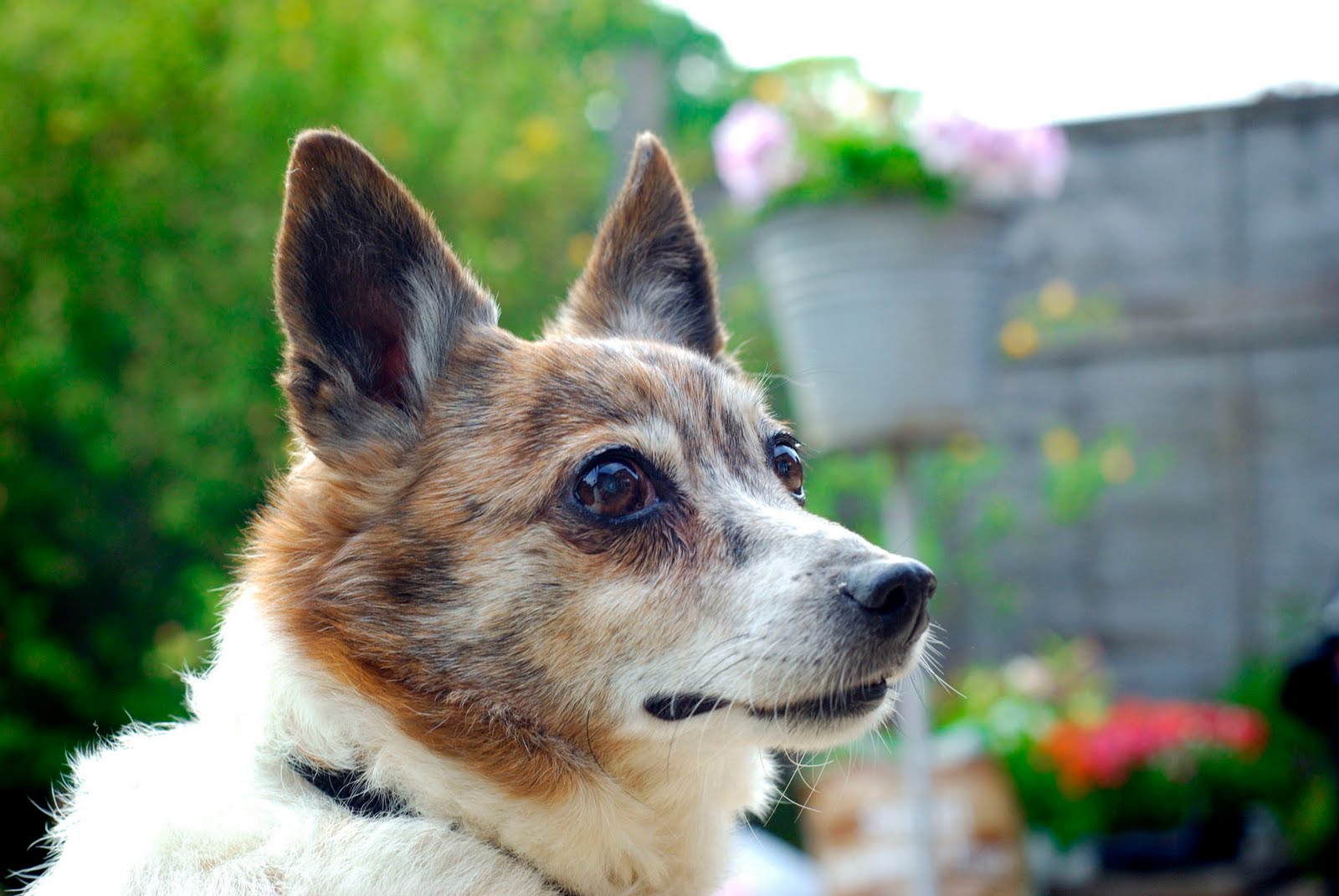
A man from a local kennels came into the pet shop and told me that a little dog called Dink and his Poodle friend had been boarding at his kennels when their owner sadly died. They had been living at the kennels for weeks while the family made arrangements. Dink is a Corgi cross who is aged 12-14. He is completely blind, although this doesn’t affect him, other than his cataracts he is fit and healthy and a great little dog.

The family had decided that they would take the Poodle but didn’t want to take on Dink and said that if a home couldn’t be found for him they would have him put to sleep. I couldn’t let this happen so I agreed to take him on.
Dink is such a fantastic little dog, very affectionate and well mannered BUT he is dog aggressive to certain dogs we meet on walks and to our Saluki Lily. We have tried all we can think of with him but nothing is working, we have also tried a muzzle on him but he hated it and kept yanking it off.
The way we are living at the moment is very stressful because Dink only has to smell Lily and he is whipped up into a frenzy, Lily is also very scared of him and it’s very upsetting to see. A couple of days ago he managed to get hold of her out on a walk and bit a hole in her leg, so he certainly means business. I now have to walk around the fields with him on the lead because I don’t want him to get hold of her or anyone else's dog.

We had a problem like this four years ago with a Yorkie called Ben that I took on, exactly the same thing, he was aggressive to our Lurcher (who has now passed away) he would pick on him constantly and made his life hell. Harvey (the Lurcher) sadly became ill and his last months with us were miserable because he was living in fear all the time. I contacted so many rescues but they all said the same – have him put to sleep.
I can see the same thing happening with Dink and I don’t know what to do or where to turn. With the same situation four years ago with Ben and Harvey I spent hundreds of pounds on trainers and behaviourists that we had found on the internet but no one helped us. We gave up in the end. I have tried to re home Dink through my shop, he would make someone a great pet if he lived on his own. Being blind he gets very wound up by the others dogs playing or barking and he needs a peaceful life. Sadly he has been rejected five times. People are put off by his age, they don’t want to take on a dog that might only have a few years left.
I feel I have many little options left. Having him put to sleep, for me is not an option. I would never give up on a dog because I know that they can change, and we have seen remarkable changes in our previous rescue dogs, but I don’t know where else to turn?
I wondered if you had any advice? Unfortunately I’m not in a financial position to take chances on trainers/behaviourists we find ourself on the internet and to be truthful, there are so many out there, how do you know they are good until they are in your house with your dog!?
Is there anyone you would recommend that would be willing to talk to me and possibly suggest some things I could try with him?
We care about Dink more than his family that had had him for 14 years and it’s so frustrating that people don’t tell you the dogs problems upfront, once they are in our house we won’t give up on them but we learn the hard way and so do our dogs.
Thank you for taking the time to read this email and I would welcome any help or advice that you have.
Hessa Riddett, by email
Subscribe to:
Posts (Atom)