May issue

May issue
May issue
Showing posts with label training a deaf dog. Show all posts

Friday, 26 April 2013

How do I train my hard of hearing pup?

Hi,

my 16-week-old Border Collie pup Mabel is partially deaf, my vet is referring her for a hearing test so we know how much hearing she has.

I am using lots of hand signals in her training, I wondered if any body had any experience and tips on training a hard of hearing pup.

Thanks,

Debbie Broadway, via Facebook

Wednesday, 16 March 2011

How do I get my well-behaved dog back?

I have a 14-year-old Yorkshire Terrier whom I have had since she was six weeks old.
We went to obedience training for two years and she passed all her tests first time. For the whole of her life she has been very obedient and well-behaved and a joy to have.
For some reason she has now become very disobedient and just ignores me when I ask her to do things. She is a bit deaf so I always give her clear instructions and also hand signals. I have started practising some of the basic obedience training and she is quite happy to do that.
Any good behaviour is rewarded and this is really easy as she is very much food orientated. I have been giving her higher value treats at present.
She has a mild heart problem but this predates the change in behaviour by many years. She is seen regularly by a vet who is happy with her health, so I do not think that there is a medical reason for this change in behaviour.
Could you suggest a cause for this behaviour change and suggest what I can do to get back my lovely well-behaved little dog?

Jean Vale, by post

Thursday, 20 January 2011

How do I get my deaf dog's attention?


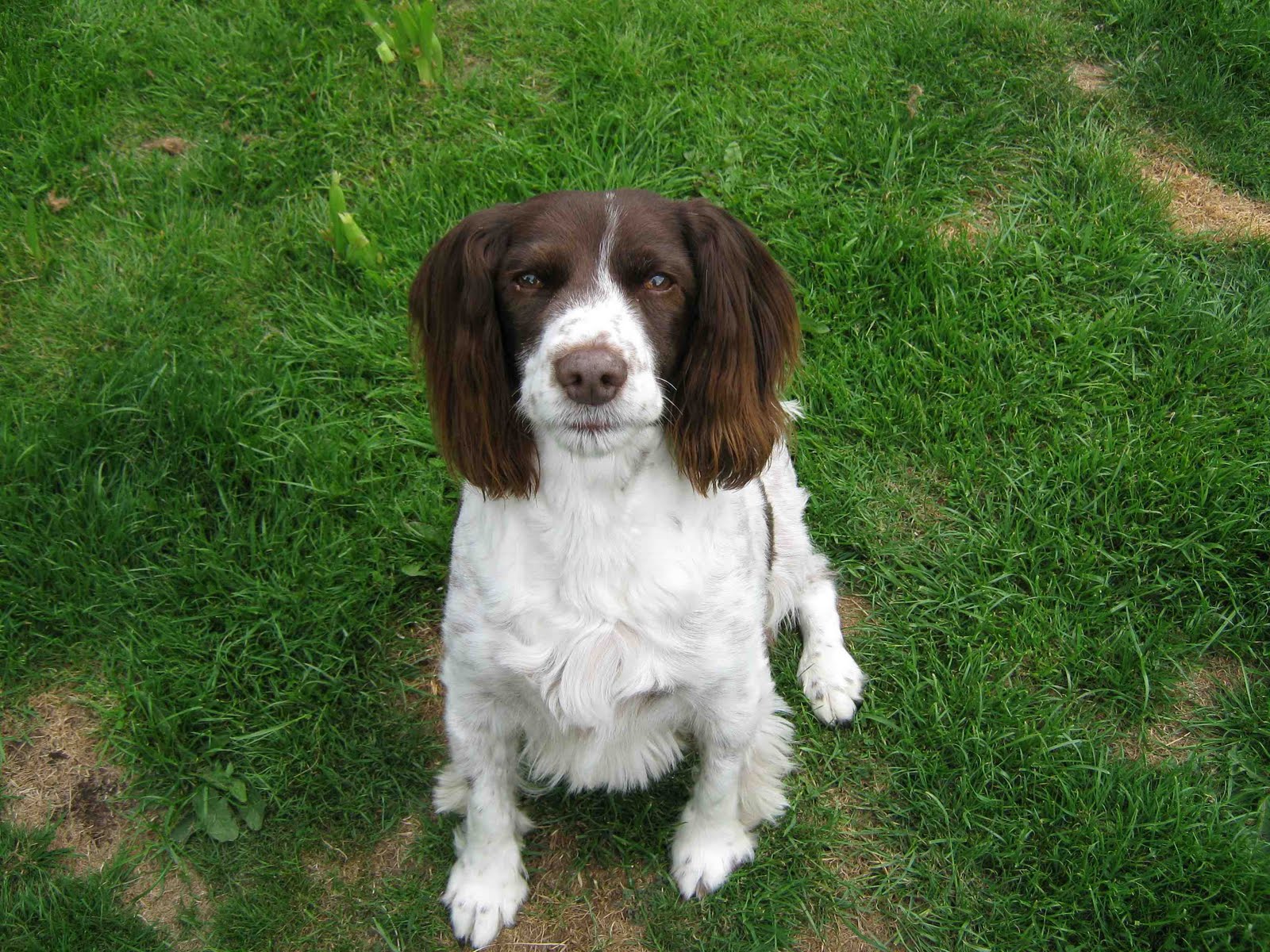
I have a Springer Spaniel called Molly who is coming up to 12 years old. I've had her for nearly five years. Over the last few months I have noticed that she can no longer hear the doorbell or people entering the house. Due to other health issues, which she takes medication for, she is on a special diet to control her weight.

Because of this weight issue, I have been told by the nurse at the vet's to keep her active, which I have been able to do for the last five years. But unfortunately it is now getting harder to let her off to play with her ball and run around due to her losing her hearing. The vet agrees that her hearing has nearly gone, if not completely gone.

I am teaching her hand signals and she now knows how to come back, but the problem is getting her attention when she is looking away from me. I'm considering a vibrating collar to get her attention, so that I can give her a hand signal to come back when she turns to look at me. Because of the lack of proper exercise due to her deafness, she is slowly putting the weight back on. This worries me as she has hip and leg problems, so she can't afford to pile the pounds back on.

What also concerns me is that every collar I've seen with a remote vibration setting also has a shock setting. I am completely anti shock-collar and I need one with just the vibration. The only one I ve seen is totally out of my price range - does anyone else have other recommendations?

Molly hasn't had a very good seven years prior to me having her, and it's great that she has a new lease of life. But this deafness is now affecting her life.

Please, please can you help with some advice, as I also worry about Molly's safety.

Tracey Topham and Molly Moo, by email

I wonder whether the collars with both remote vibration setting and shock setting can be used on vibration only. Then you would not have to use the shock setting.

It is so sad when a dog goes deaf. When my dear Border Collie Nan began to lose her hearing, I found it really upsetting that she might think I was no longer talking to her. There are of course other ways of showing how we care for our canine friends, and for the dog it must simply seem that the world is going quieter until it is a silent place. They do not, I hope, appreciate that the noisy world is ongoing as a human going deaf would.

For any dog going deaf, their safety is of paramount importance. We all know how deaf a dog with normal hearing can be when in pursuit of a rabbit, for example, and may have no regard for a danger which is fast approaching. With Nan, she did train up to hand signals when I realised that her hearing was failing but, as you say, they only work when the dog happens to be looking in your direction. Eventually, I did have to resort to an extending lead – I really dislike these leads with their clonky handles, but they are invaluable in those instances where you cannot let your dog off the lead for whatever reason but they still need exercise.

Molly’s weight problem is my major concern. To my repertoire of questions for owners of overweight dogs, I have recently added “… and is that hour’s exercise on or off the lead?” This is because an owner proudly told me last week that his overweight dog went for two hour-long walks every day. I could not understand why the weight reduction diet was not working (unless the owner was not admitting to titbits and other food sources) until the owner let slip that all the exercise was on the lead. There is a world of difference in energy output between an hour’s exercise off the lead (which for an overweight dog is realistically no more than a trot) and a plod at your owner’s walking pace, if not lagging behind. I am also an advocate of short frequent walks during the day for older dogs rather than a single long walk.

This is where an extending lead could really help you because Molly can feel as if she has freedom to explore but she would have the security of being on a lead still, and you would know that she was safe.

Depending on Molly’s other health problems and the medication she needs for them, it should be possible to keep her at a healthy weight but it will need constant vigilance on your part. Use your vet practice’s weight clinic – the nurse is running it to help you keep Molly at her ideal body condition, by taking into account the limitations on exercise because of her deafness and orthopaedic problems. As you quite rightly say, with her hip and leg problems she does not need to be carrying more weight than necessary.

Alison Logan, vet

Tuesday, 14 September 2010

Going deaf and getting depressed

I wonder if you can help as I can’t find anything in any of the back-issues I have, but my 13-year old Border Collie, Beau, has over the past 12 months or so been loosing her hearing and it is now almost gone.  I took her to the vets to check her over as the stage from not hearing bits of what was said to her to hearing very little of what you said was very quick.  The vet said that it was not unusual and it was probably due to age.  Unfortunately that doesn’t help Beau, who being a Border Collie doesn’t do ‘age’ and still thinks she is a pup.
Over the past two months I have noticed a real decline in her and I can only put it down to depression, in that she thinks no-one is talking to her.  I have been trying to teach her sign language, and have just got her a vibrating collar – only problem is I really don’t know where to start without scaring her with the vibrations.  I am trying to get a book called ‘Hear Hear’ which I think is about training deaf dogs, but I was wondering if you had covered anything like this in your magazine as I am sure, like people, there are lots of dogs who go deaf when they get older but would still like to join in and be part of the rest of the family!
Anything you can do to help would be appreciated by both Beau and me!
Regards
Janine Lodge, by email

Barry Eaton who wrote the fantastic Hear Hear does sometimes stop by here, hope he and others can give you some help and support at this worrying time.
Beverley Cuddy, Ed

Barry Eaton says:
Age related deafness is not uncommon - even in Border Collies. Ideally it would have been good to put in place visual signals with verbal ones over the last 12 months so as the deafness progressed the visual cues would take over from the verbal ones. As it is, I'm afraid you'll have to start teaching Beau visual cues from scratch. But don't worry - it's not difficult. Start with something simple, like getting him to sit using a food treat as a lure and developing a hand signal at the same time. All the basic commands you need to know are explained in my book 'Hear, Hear'. Have a look at www.deaf-dogs-help.co.uk Body language and facial expressions are very important when communicating with Beau. If he gets something right, smile, have an open body posture and give him lots of hugs. Always talk to him during training (and at other times). If you just think 'good dog', your face won't light up with delight when he gets something right. If you actually say 'good dog' and mean it, you can't help your face from showing how pleased you are. If you are teaching something and he hasn't quite got it, show no expression on your face. Eventually, Beau will learn that your happy, smiley face means he's done good and a blank expression means he's not quite got it. It doesn't matter what hand signals you use as long as they are clear and simple.
I generally recommend deaf dog owners to take great care when using vibrating collars. There is nothing guaranteed about them. It may work; it may not. It may work for a long time; it may work until Beau becomes accustomed to it and chooses to ignore it. It may be scaret; it may not. As you already have a vibrating collar, it might be worth trying it and see what his reaction is. But if he really doesn't like it, do not persevere with it. Just put it down to experience and throw it away. If however he accepts it, it's best to get him conditioned to it in the same way a dog is conditioned to a clicker. So instead of click/treat, you would vibrate/treat until he feels the vibration and looks to you for a reward. Most people would like to use a vibrating collar for a convenient recall but that would limit its use to just one command. And just as hearing dogs someimes go conveniently deaf when they are called, so Beau could conveniently ignore the vibration knowing he's supposed to go back to you. The biggest problem most owners have with deaf dogs is getting their attention. So I suggest, if you can use the collar, you use it for just that - to get his attention. Once Beau has felt the vibration, you need him to look at you (which he should do if he has been conditioned to it) then you can give him any command you have taught him. There are many vibrating collars that can also be used as an electric shock collar. If you have one with such a device, never, never use it - under any circumstances.
As you know, collies are very bright and mentally (and physically) active. I'm sure he'll relish a new challenge of learning hand signals and body postures. Once Beau has responded to his first visual command you've taught him, you will feel a real 'buzz' of excitement and, hopefully, will be encouraged to carry on teaching him more and more commands. The sky's the limit. I train my hearing dogs with verbal and visual commands and they respond better to visual commands. So in the meantime, if you think he's feeling depressed, interact with him more, play with him; have fun.
Best of luck and have fun training.